
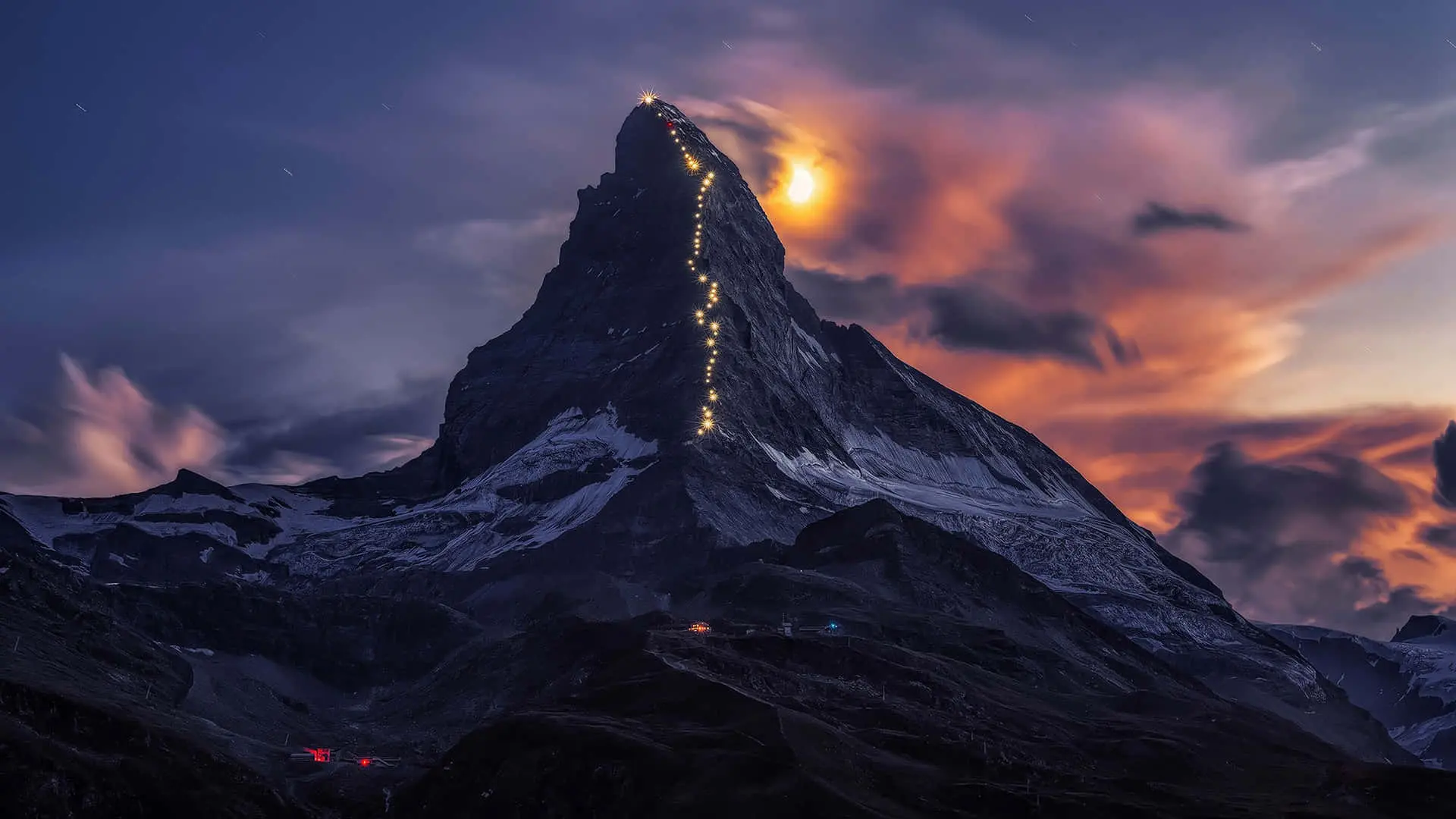
Do it yourself: acclimatize for the Matterhorn and other 4,000m peaks
Self-guided preparation for the Matterhorn and other 4,000m peaks.
Proper acclimatization makes a real difference to your safety, your experience, and your summit chances. Everything in this guide can be done on your own before your tour. The hikes are on marked trails, there is no glacier travel, and the huts are all reached by lift plus walking.
Principles
Six things that drive altitude adaptation. Get these right and the schedule mostly takes care of itself.
Sleep high, not just visit high
Day trips to altitude help very little. Sleeping at altitude is what drives adaptation.
Two nights at altitude is highly recommended
One night gives a small benefit, two gives a real one, three is better again.
Climb high, sleep moderately high
Gain elevation during the day, then drop back a few hundred metres to sleep.
Build progressively
Don't arrive in Zermatt and sleep at 3,200m the same night.
Hydrate, salt, and fuel
Aim for 3 to 4 litres of water a day, salt your food generously, and eat plenty of carbohydrates even if your appetite drops. Your body needs all three to adapt.
Know the warning signs
A mild headache or poor sleep on night one is normal. Worsening symptoms, vomiting, or breathlessness at rest mean descend.
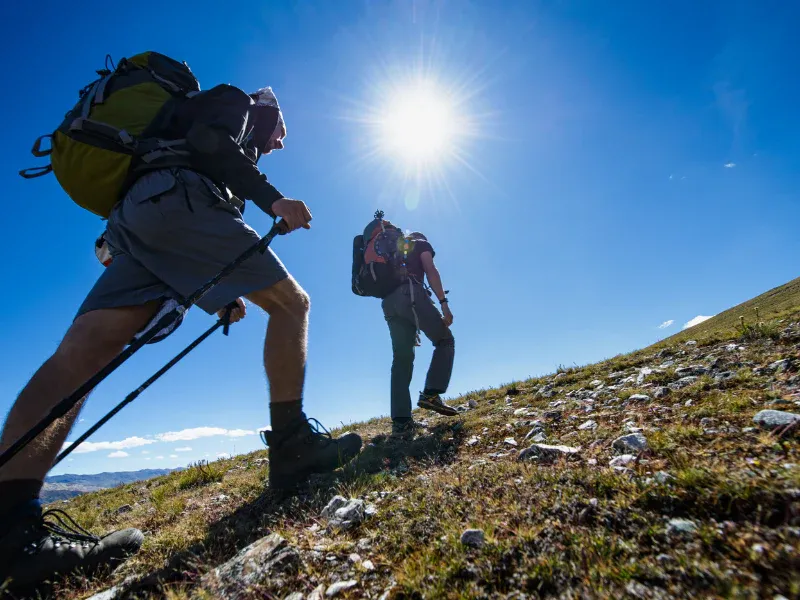
Recommended schedule
Arrive several days early. Where the schedule splits, pick the option that suits your fitness and which huts you can book.
Arrive in Zermatt
Arrive in Zermatt (1,620m). Easy walk, light dinner, early night.
Sleep: Zermatt · 1,620m
Go high, then sleep at a hut
Take the cable car up to Matterhorn Glacier Paradise / Klein Matterhorn (3,883m, the highest lift station in Europe) for altitude exposure and views. Then pick a route:
Option A — simplest
Transfer to Testa Grigia via the Glacier Ride II cable car, then a short descent on the ski piste to Rifugio Teodulo. Sleep there.
Sleep: Rifugio Teodulo · 3,317m
Option B
Ride back down to Trockener Steg, easy walking around the Gandegg area, and sleep at Gandegghütte.
Sleep: Gandegghütte · 3,030m
A second night up high
Option A
Second night at Rifugio Teodulo. Easy walking around Plateau Rosa, with an optional café trip up to Testa Grigia (3,480m). Bring light crampons if the piste refroze overnight.
Sleep: Rifugio Teodulo · 3,317m
Option B
Hike the Matterhorn Glacier Trail from Trockener Steg to Schwarzsee (~2 hrs, marked, no glacier), then up to Hörnlihütte at the foot of the Matterhorn (~2 hrs).
Sleep: Hörnlihütte · 3,260m
Descend to Zermatt
Rest morning at altitude. Lunch at the hut, then descend.
Option A
Cable car Testa Grigia → Klein Matterhorn → Zermatt.
Option B
Walk down to Schwarzsee, then cable car to Zermatt.
Rest in the afternoon and run through a gear check with your Guidezone guide.
Sleep: Zermatt · 1,620m
Guided tour
Acclimatized and rested, you meet your guide for the climb.
High huts
Book months ahead for July and August, especially for weekends.
Rifugio Teodulo
Klein Matterhorn → Testa Grigia cable car, then a short walk down on the ski piste.
Highest sleeping option. Beds in rooms (no dormitory) and often hot showers. Spectacular view to the Gran Paradiso.
rifugioteodulo.comHörnlihütte
At the foot of the Matterhorn. A 2 hr hike from Schwarzsee, or via the Matterhorn Glacier Trail from Gandegg.
The classic launch point for the Hörnli Ridge — and a memorable place to sleep in its own right.
hoernlihuette.chGandegghütte
Cable car Zermatt → Furi → Trockener Steg, then 30 min on foot.
Stunning views of the Monte Rosa massif and the Mischabel chain.
gandegg.chAcclimatization hikes
Lift-enhanced, on marked trails, with no glacier travel.
Matterhorn Glacier Trail
Trockener Steg (2,939m) to Schwarzsee (2,583m). ~2 hrs, marked, no glacier. Links Gandegghütte to Hörnlihütte.
Plateau Rosa loops
From Rifugio Teodulo. Short, easy walks around the plateau at 3,300 to 3,500m, with an optional café trip up to Testa Grigia. Crampons recommended if the piste refroze overnight.
Gornergrat → Riffelsee → Fluhalp
Train to 3,089m, then walk the Seenweg lake trail past Riffelsee down to Fluhalp (2,606m). A great alternative day if the huts above are booked.
Sunnegga → Blauherd → Rothorn
Cable car to 3,103m. Descend via Fluealp, Stellisee, or the Five Lakes Walk. 2 to 5 hrs, flexible length.
Pack for the hut
Huts supply blankets and meals, but you carry the rest. A light, well-chosen kit keeps the nights comfortable and the mornings quick.
- Silk sleeping bag liner (mandatory in all huts, Swiss and CAI alike)
- More water than you think — at least 2L capacity, refilled often
- Light crampons if doing the Plateau Rosa morning walk
- Headlamp, earplugs, and a small quick-dry towel
- Cash in CHF (EUR also works at Rifugio Teodulo)
- Warm layers — it's cold after sunset at 3,000m, even in August
- Sunscreen SPF 50, lip balm with UV, and category 3 to 4 sunglasses
- Hiking boots, trekking poles, and ibuprofen for mild headaches